Which Of The Following Statements Is True Of Active Listeners. A) they are engaged in listening with their minds and their hearts. C) active listeners will put themselves in the other side's shoes.
B) active listeners will communicate, in their own words, what they think the other side is feeling. Question 16 4 out of 4 points the 70/30 principle states that true active listeners spend almost 70 percent of their time: Active listening refers to a communication technique that's utilized in substance, training, and conflict resolution.
It Becomes Necessary When Communicating Long And Complex Messages.
Question 16 4 out of 4 points the 70/30 principle states that true active listeners spend almost 70 percent of their time: A) active listeners will communicate, in their own words, what they think the other side is saying. B) it enables you to express an evaluation of what the speaker has said.
Active Listening Refers To A Communication Technique That's Utilized In Substance, Training, And Conflict Resolution.
Which of the following statements is true of active listeners? C) they should listen for full meaning and avoid paraphrasing what the speaker is saying. Which of the following statements is true of active listeners?
A) They Are Engaged In Listening With Their Minds And Their Hearts.
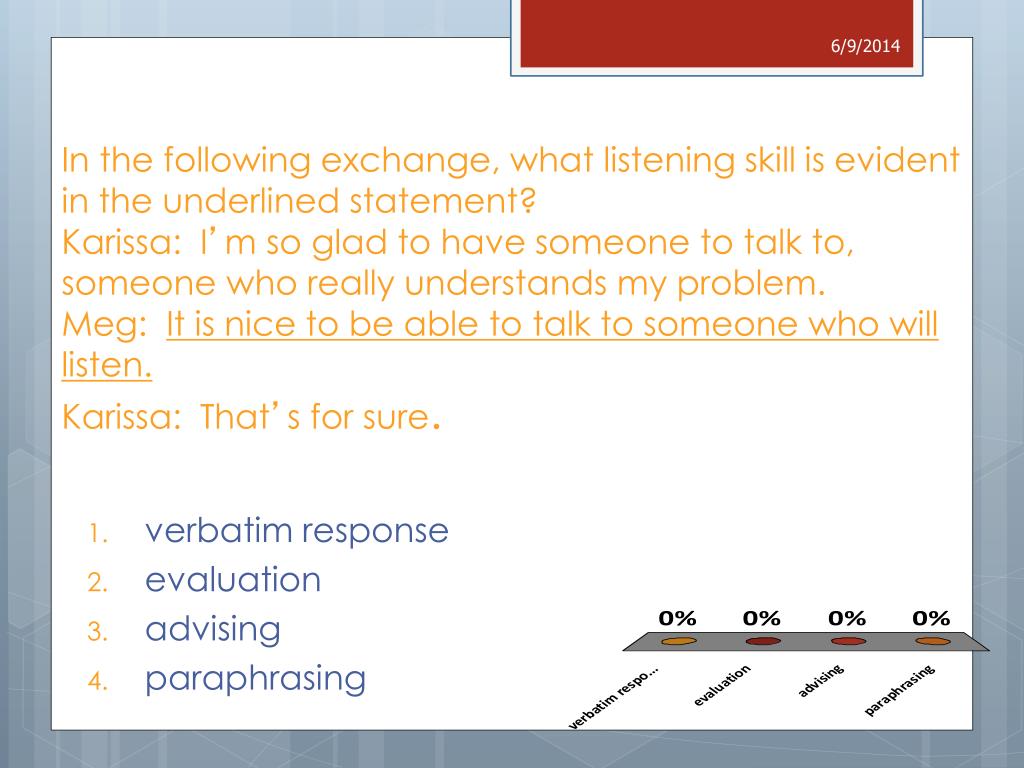
In the context of active listening, which of the following statements is true of paraphrasing? B) they should not interrupt the speaker, but should feel free to ask questions about the topic. Active listening requires the listener to pay little attention to what the speaker.
1) A Good Listener Sometimes Speaks Or Paraphrases 2) A Good Listener Is An Active Communicator 3) Good Listening Can Be Exhausting
1 see answer tyrese821 is waiting for your help. A) it enables you to check your understanding of what the speaker has said. A) they should avoid making eye contact and nodding as this will distract the speaker.
The Listener Focuses His Or Her Complete Attention On The Speaker.
Involves clarifying a message received. Involves only 30 percent listening. Lisa is in the process of improving her listening skills.
